

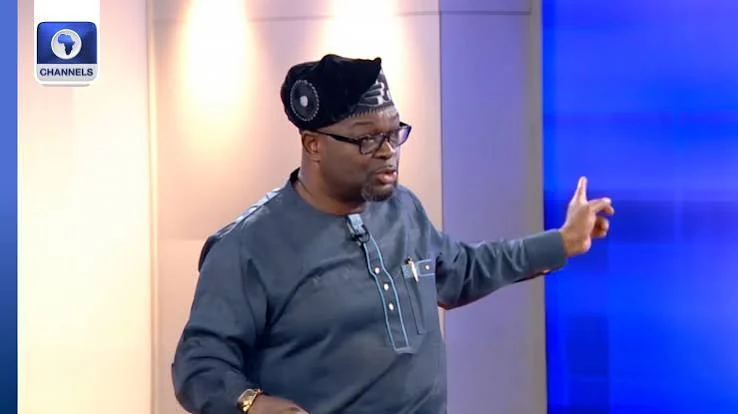
Lawyer and public commentator, Charles Omole, has identified inadequate funding, professional competence, and weak recruitment standards as major hurdles that must be addressed to ensure the successful implementation of state police in Nigeria.
Omole, who spoke on Channels Television’s Politics Today, said the appointment of competent professionals to manage the transition and the establishment of a sustainable funding structure would be critical to the success of the proposed policing system.
Describing the agreement by all the states on the constitutional amendment as historic, he said previous attempts at constitutional amendments in Nigeria had often been characterised by political bargaining and competing demands.
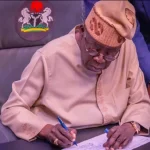
He commended President Bola Tinubu for securing support for the amendment, noting that the development demonstrated the importance of focused leadership.
ALSO READ: Allowing Tinubu complete eight years better for national unity — APC’s Kwankwaso
“It is very historic. The history of constitutional amendment in Nigeria is always trade by barter. You want to change this, then some states will say, ‘For us to sign on to this, you need to give us this or that.’
“But this is one amendment bill that went without anybody giving any additional requirements or requests from the President. It is very historic, and I think the President should be commended for that,” he said.
Omole explained that the constitutional amendment was only the first step towards establishing state police, adding that a separate National Policing Bill would provide the operational framework for the proposed arrangement, including the responsibilities, powers and limitations of the federal and state police services.
He clarified that the amendment would not automatically establish police services in all 36 states, as individual states would be required to apply and satisfy prescribed conditions before setting up their own police services.
According to him, the National Policing Bill would establish an executive agency under the National Policing Council to assess applications from states against minimum standards covering recruitment, training and equipment.
He said states that failed to meet the requirements would have their applications declined until they were able to satisfy the prescribed conditions.
Omole also clarified that the Federal Capital Territory would remain under the Federal Police because of its status as a federal territory, rather than having a separate police service.
Identifying the appointment of competent personnel as his first major concern, he urged the President to prioritise professional expertise over political considerations in selecting those who would oversee the transition.
“One of my greatest wishes is that when it comes to security, the President should focus on competence, not political patronage. It is about who is the best person to do this, not political considerations.
“Security is our number one problem, so we need hands there that know what they are doing,” he said.
On recruitment standards, the lawyer expressed concern that the National Assembly might lower the proposed minimum educational qualification for state police officers when considering the National Policing Bill.
He said the proposed minimum qualification, as he understood it, was the Ordinary National Diploma (OND), but warned that lawmakers might push for a reduction to secondary school certificate level.
Omole argued that Nigeria had enough qualified unemployed graduates to meet the recruitment needs of the proposed police services and should therefore maintain standards capable of attracting competent personnel.
On funding, which he described as his biggest concern, he said establishing decentralised police services would require substantial initial investment, with about 80 per cent of the costs incurred upfront.
He called for the restructuring of the Nigeria Police Trust Fund, explaining that its existing establishment Act restricted its operations to the Federal Police and did not permit it to support state police services.
“The current Nigeria Police Trust Fund, by its establishment Act, is focused only on the Federal Police. They cannot spend one kobo on any state to support any state police.
“So there has to be a new funding organisation, and that has to be done immediately because a lot of states need financial support now,” he said.
Omole said the transition could take about two years, depending on the preparedness of individual states, noting that some states, including Lagos, were better positioned to establish their police services more quickly than others.
He explained that under the proposed naming convention, state police formations would be known as State Police Services, while the existing Nigeria Police Force would become the Federal Police Service.
He also raised concerns about the financial implications of allowing states to decide whether or not to establish their own police services.
Drawing lessons from Canada, Omole explained that regions that did not establish their own police services were required to pay the federal government for policing, following concerns that regions operating their own police services were bearing heavier financial responsibilities.
He suggested that Nigeria might need to consider a similar arrangement to prevent states that declined to establish their own police services from relying indefinitely on federal policing without an appropriate financial contribution.
Recalling Nigeria’s policing structure between 1960 and 1966, he said the Northern and Western regions operated their own local policing arrangements, while the Eastern Region relied on the Federal Police.
He said the experience showed that different policing arrangements across the country were not entirely new but stressed that the financial, institutional and operational implications of the proposed system must be carefully addressed.
WATCH TOP VIDEOS FROM NIGERIAN TRIBUNE TV