


The Nigerian Upstream Petroleum Regulatory Commission (NUPRC) projects that Nigeria’s upstream oil and gas sector is projected to attract between $30 billion and $50 billion in offshore investments between 2026 and 2030.
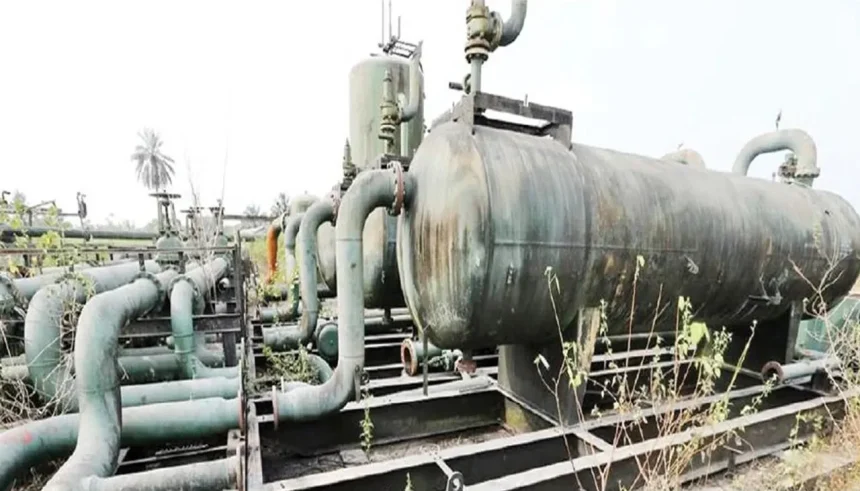
According to the commission, the investment will be driven by 22 major offshore projects expected to boost crude oil production, create jobs, expand energy infrastructure, and strengthen Nigeria’s energy security. At the centre of this achievement will require continued protection of oil assets.
One of Nigeria’s biggest dreams is to achieve a $1 trillion economy and between $30 billion and $50 billion in offshore investments by 2030. The NUPRC and other stakeholders in the economy are working hard to realise the targets.
The NUPRC attributed the improved outlook to reforms introduced under the Petroleum Industry Act (PIA), improved licensing transparency, and faster project approvals.
Since 2024, the regulator has approved more than $57 billion in Field Development Plans, with several projects already progressing to Final Investment Decisions.
The Commission also said preparations for the 2026 Licensing Round are underway as it seeks to attract further investment into Nigeria’s upstream sector. The planned projects are expected to support the government’s target of increasing crude oil production to 2 million barrels per day by 2027 and 3 million barrels per day by 2030.
According to them, gaining the oil sector backing in this milestone journey requires more than policy pronouncements from the NUPRC.
It requires investment drive, attractiveness to global energy markets and support of domestic players in the industry.
Effectively harnessing the oil revenue requires that the Niger Delta, a region severally described as the goose that lays the golden eggs, must also be at peace and oil infrastructure across the region well secured.
That is where the Federal Government of Nigeria’s appointment of Tantita Security Services Nigeria Ltd (TSSNL) to protect oil assets and ensure peace and stability in the Niger Delta comes to play.
That singular act will contribute positively to achieving $30 billion and $50 billion in offshore investments between 2026 and 2030, as predicted by NUPRC.
President Bola Ahmed Tinubu had appointed Tantita Security Services Nigeria Limited (TSSNL) led by High Chief, Dr. Government Oweizide Ekpemupolo, alias Tompolo, to protect Nigeria’s oil assets in the Niger Delta region.
The appointment was to enable TSSNL, through its security operations, support the national economy in getting the full benefits of oil resources.
The TSSNL works in collaboration with other security outfits to achieve its goals of securing oil assets and ensuring peace and stability in the Niger Delta region.
Tantita’s operations had ensured the security of oil pipelines, ensured the uninterrupted flow of petroleum resources, and ensuring that Nigeria migrated from a position of constant loss management to stability, planning, growth and development.
As stakeholders advocate for the continued collaboration with TSSNL, the imperative of securing oil infrastructure remains at the forefront of efforts to ensure the nation’s sustainable development.
In the development process of any society, certain assets contribute to the advancement of society and its people.
These assets ensure economic or monetary benefits for the people. These assets could be regarded as operating assets, non-operating assets or leased assets, among others.
The impact of TSSNL’s operations was captured in a recent survey, with majority of the respondents attributing the de-escalation of security incidents in the Niger-Delta region to the pipeline surveillance operations executed by TSSNL.
To achieve efficiency in its operations, Tantita deploys surveillance technology to protect infrastructure from vandalism, theft, and unauthorized access.
It offers a range of surveillance systems customized to meet the specific needs of our clients.
The company installs high-resolution cameras with night vision and thermal imaging to monitor activities 24/7, ensuring that no event goes unnoticed.
Its surveillance systems allow for remote monitoring through secure networks, giving authorized personnel access to live footage anytime, anywhere.
Also, its cameras with motion sensors and AI capabilities can automatically detect unusual activity, triggering alerts for immediate response.
In a report on its website, Tantita said controlling access to critical areas ensures that only authorized personnel have entry, reducing the risk of insider threats or unauthorized access.
“Systems such as fingerprint scanners, facial recognition, and retina scanners ensure secure and efficient access management. RFID Smart Card Systems allow for restricted access to key areas and provide a record of entry logs for enhanced accountability,” it said.
The company said it also installs turnstile gates and automated barriers to control entry points in high-security facilities, minimizing unauthorized movement.
“Early detection of potential threats is crucial for preventing damage and ensuring timely responses.
Our integrated alarm systems are designed to detect and notify security teams of intrusions instantly. Our perimeter Intrusion Detection Systems (PIDS) detect breaches along fences or walls, issuing immediate alerts,” it said.
What stakeholders are saying
In a published report, President General, Niger Delta Progressive Alliance, Nse Victor Udoh, said pipeline protection enabled national institutions to progress from reactive crisis management to strategic foresight, from temporary containment to durable systems-building, and from uncertainty-driven decisions to calculated national ambition.
“It is important to clarify the role of pipeline surveillance within the wider energy landscape. Energy security encompasses the full value chain, from exploration and production to refining, distribution, pricing policy, and subsidy frameworks. Pipeline surveillance does not manage these domains,” he said.
He added: “Its mandate is precise: safeguarding critical infrastructure that transports petroleum resources. Yet this single function has proven foundational. Without secure transportation channels, production targets falter, refining plans collapse, exports decline, and fiscal projections become unreliable.”
Continuing, he wrote: “Asset protection, in this context, is not a supporting activity. It is a precondition for economic order. In effect, the pipeline is the hinge on which the entire petroleum value chain turns. When that hinge is weak, every other link in the chain carries strain. When it is secure, the entire system gains coherence.”
The immediate impact has been operational. Sustained monitoring and rapid response systems have sharply reduced pipeline breaches and illegal tapping. Receipt rates have climbed toward full recovery, with national output rising to levels not seen in recent memory.
This redirection has restored Nigeria’s credibility in international oil markets, allowing Nigeria to reclaim market share lost to Angola and Libya.
“Economic stability follows predictability. When crude flows are secure, refineries can plan feedstock intake with assurance. Export commitments can be met without fear of sudden shortfalls. Gas-to-power projects can operate without recurrent shutdown risks”.
Investors can assess Nigeria’s petroleum sector with clearer risk profiles. Surveillance therefore does more than stop theft. It reintroduces reliability into national energy planning. And reliability is the bedrock upon which sustainable economic growth is built. With predictable flows, national budgeting becomes more credible, infrastructure planning becomes more precise, and long-term contracts become easier to negotiate. Predictability is the silent currency of modern economies, and pipeline surveillance has begun restoring it,” he stated.
Traditional rulers and community leaders in the Niger Delta have called for continued support for Tantita Security Services Limited following a vote of confidence passed on the firm by the National Assembly of Nigeria.
The leaders said the company’s involvement in securing oil and gas pipelines has led to visible improvements in oil-producing communities, particularly in reducing crime and creating jobs for youths.
Speaking on the development, the President-General of the Isoko Development Union, Christopher Akpotu, praised the joint committee of the Senate and House of Representatives for dismissing petitions filed against the firm.
He described the decision as a positive step for the Niger Delta and urged stakeholders to focus on economic gains rather than internal disagreements. “That is the right way to go,” he said.
“There are many opportunities in the oil and gas sector. We should focus on how to derive more benefits rather than fighting over what has already been allocated.”
Akpotu warned that continued disputes among communities could allow outsiders to take over opportunities meant for host communities.
“At the end of the day, if we continue fighting, we give room to those who have no stake in our communities to take what rightfully belongs to us,” he added.
UPDATE NEWS:
Nigerians can now invest ₦2.5 million on premium domains and profit about ₦17-₦25 million. All earnings paid in US Dollars. Rather than wonder,
click here to find out how it works.