


By Chuks Oyema-Aziken
The Chief of Defence Staff (CDS), General Olufemi Oluyede, has warned that the growing use of artificial intelligence to produce fake images, videos and audio recordings poses a serious threat to Nigeria’s security environment, urging media organisations and security agencies to strengthen collaboration against misinformation.
Oluyede said the increasing circulation of fabricated content, misleading security reports and old videos presented as current incidents could undermine public confidence, distort the realities of military operations and provide opportunities for hostile actors to advance their propaganda.
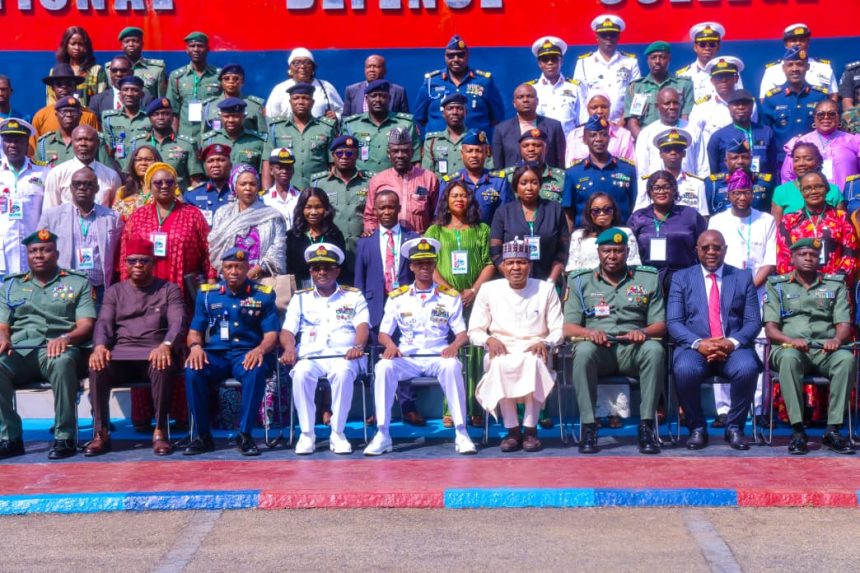
The CDS spoke on Tuesday at the 2026 Defence Headquarters Strategic Communication Workshop in Abuja, with the theme, “Enhancing Strategic Collaboration Between Spokespersons of Security Agencies and Media Stakeholders for Accurate and Responsible Reportage Towards Improved National Security.”
He described the information domain as an increasingly critical theatre of modern warfare, stressing that military effectiveness was no longer determined solely by combat capabilities but also by the ability to manage information, counter adversarial narratives and sustain public confidence.
According to him, Nigeria’s expanding media landscape has improved access to information but also increased the risks of misinformation, disinformation and manipulated content, particularly on digital and social media platforms.
He urged journalists to make verification a priority rather than sacrifice accuracy for speed and sensationalism, while calling on security agencies to develop stronger capacities to identify and counter AI-generated falsehoods.
Oluyede also cautioned media practitioners against publishing sensitive operational details, including troop movements, locations and military capabilities, warning that such disclosures could expose personnel to danger and compromise ongoing operations.
He, however, maintained that the Armed Forces recognised the media as an important national security partner and did not expect journalists to abandon their responsibility to question institutions and hold security agencies accountable.
Rather, he advocated a relationship founded on mutual respect, professionalism, trust and objective reporting, alongside sustained engagement and specialised training for defence correspondents to bridge information gaps.
The CDS, who quoted former British operational commander in Iraq, Assistant General Jonathan Shaw, underscored the importance of ensuring that information released by security agencies and subsequently reported by the media remained truthful and credible.
He expressed appreciation to President Bola Ahmed Tinubu for creating an enabling environment for transparency and independent media reporting.
In his remarks, the Minister of Information and National Orientation, Alhaji Mohammed Idris, represented by the Director-General of Voice of Nigeria, Mallam Jibrin Baba Ndace, said effective communication was indispensable to national security, particularly amid terrorism, banditry, kidnapping, organised crime and cyber threats.
Ndace said the responsibilities of the military and the media, though different, were complementary, urging security agencies to provide timely and credible information while encouraging journalists to verify facts, provide context and avoid reports capable of endangering lives or undermining military operations.
He warned that misinformation could trigger public panic, deepen distrust and weaken confidence in security institutions, while delayed official communication during major security incidents could create information gaps exploited by hostile actors.
The minister’s representative stressed that responsible journalism should not be confused with censorship, noting that security institutions must remain accountable to legitimate public scrutiny within the limits of their constitutional responsibilities.
He disclosed that President Tinubu approved preparations for a comprehensive national threat assessment and a rolling five-year strategic defence operations plan in August 2026 to strengthen coordination across the country’s defence, intelligence and security architecture.
Ndace also revealed that troops of the Armed Forces conducted 14,231 operations between January and June 2026, rescuing 1,516 kidnapped victims.
He urged media organisations to give balanced attention to both security challenges and operational achievements, rather than concentrating exclusively on negative developments.
He further called for greater engagement with editors, newsroom managers and media executives, noting that responsible security reporting required the collective commitment of reporters and those responsible for editorial decisions.
Ndace also highlighted Nigeria’s collaboration with UNESCO in establishing the International Media and Information Literacy Institute, officially launched in April 2026, as part of efforts to strengthen public capacity to assess and verify information.
The workshop brought together security agency spokespersons, media executives, editors, defence correspondents and online publishers to strengthen professional cooperation and promote accurate reporting in support of national security.