


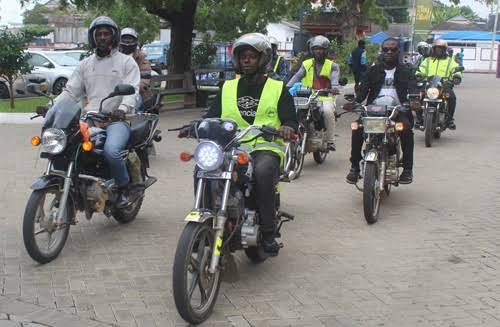
For 17 months, residents of Gombe metropolis have had to find alternative means of transportation after 7 pm, when commercial and private motorcycles are barred from operating until 6 am.
Introduced by the police in June 2025 to tackle phone snatching, thuggery and other violent crimes, the restriction remains in force despite growing concerns about its impact on livelihoods, businesses and residents’ freedom of movement.
While the Gombe State Police Command maintains that the measure is necessary to protect lives and property, publicly available records have yet to establish the extent to which crime has reduced since its introduction or whether motorcycles remain a major means of transportation for criminals.
The restriction was announced on June 11, 2025, following public outrage over the killing of a 45-year-old businessman, Ahmed Aliyu Umar, popularly known as Amadi Kasiran, at Hammadu Kafi, on the outskirts of Gombe metropolis.
Police said the businessman was attacked with a knife and later died from his injuries after being taken to hospital.
The incident was widely linked to suspected phone snatching and Kalare activities, although subsequent reports gave differing accounts of the circumstances surrounding his death.
In addition to the nighttime restriction, the police prohibited motorcycle operators from carrying more than one passenger and banned the use of vehicle-type horns.
The Command said the measures were designed to curb violence, intimidation and other criminal activities associated with Kalare groups.
It subsequently granted exemptions to essential service workers, including healthcare personnel, journalists and emergency responders, provided they could produce valid identification and proof of employment.
The state government and police have consistently defended the restriction as a necessary security measure.
In July 2025, Governor Muhammadu Inuwa Yahaya backed the police decision, while the Command’s spokesperson, DSP Buhari Abdullahi, said the restriction had contributed to a decline in criminal activities and supported ongoing investigations.
The governor also disclosed that security operatives had confiscated more than 1,000 motorcycles since enforcement began, with over 90 per cent reportedly unregistered or without number plates.
The police also announced the establishment of 47 checkpoints across the metropolis to enforce the restriction.
In April 2026, the Police Command reaffirmed its commitment to enforcing the 7 pm to 6 am restriction following a security review involving other security agencies and stakeholders.
It said the decision was informed by prevailing security concerns and the need to prevent motorcycles from being used for criminal activities.
However, incidents of violent crime and theft have continued to be reported in Gombe since the restriction came into effect.
Among them was the killing of Maryam Hassan, who was found with severe head injuries at Kundulun Quarters on February 3, 2026.
LEADERSHIP also reported that on September 26, 2026, a woman identified as Aishatu Salisu was stabbed to death during an attempted phone robbery at Wuro Shie Quarters. Two suspects were subsequently arrested.
Other reported incidents have included housebreaking, kidnapping and armed robbery, although available reports do not establish that motorcycles were used in all the cases.
Similarly, on June 7, 2026, armed men reportedly invaded homes in Wuro Biriji, Akko, and stole residents’ phones. Police said the stolen devices were subsequently used to access victims’ bank accounts and obtain money through unauthorised transactions.
The continued occurrence of theft and violent crimes raises questions about the overall effectiveness of the restriction, particularly in the absence of publicly available crime statistics showing the extent of any reduction since its introduction.
Efforts to obtain the Police Command’s response were unsuccessful as of press time.
When contacted, the Command’s spokesperson, DSP Buhari Abdullahi, said he would respond to a message sent to him. However, he had yet to provide a response at the time of filing this report.
Beyond the security debate, the restriction has created transportation difficulties for residents who depend on commercial motorcycles to return home after work or move around the metropolis at night.
Some residents have complained that alternative public buses introduced by the state government are inadequate to meet transportation demand, particularly in communities with limited access to other means of transport.
A mechanic, Hassan Nuhu Akko, told LEADERSHIP that the restriction had affected his productivity because his apprentices often arrived late, resulting in lost working hours.
An apple seller, Dauda Mohammed, also said the restriction had reduced his customer base, explaining that his business normally attracted more customers at night.
Commercial motorcycle operators have equally complained about losing the income they previously generated during evening hours.
One operator, Saddam Bodejo, alleged that some police officers demanded money from motorcycle riders while enforcing the restriction.
The police, however, have consistently denied receiving money or formal complaints of extortion.
We’ve got the edge. Get real-time reports, breaking scoops, and exclusive angles delivered straight to your phone. Don’t settle for stale news. Join LEADERSHIP NEWS on WhatsApp for 24/7 updates →