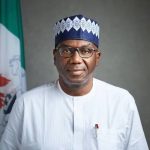


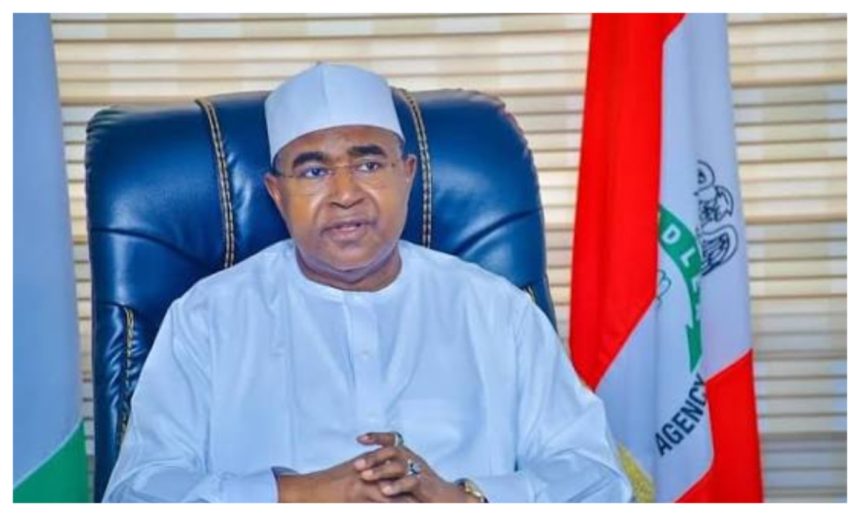
The Chairman and Chief Executive Officer of the National Drug Law Enforcement Agency, NDLEA, Brig. Gen. Mohamed Buba Marwa, retd., has urged Nigerian youths to shun shortcuts to wealth and stay away from illicit drugs.
NDLEA Director of Media and Advocacy, Femi Babafemi, disclosed this in a statement issued in Abuja.
Marwa gave the charge on Saturday, November 28, 2026, while delivering the 24th Convocation Lecture of Igbinedion University, Okada, Edo State, titled “Graduates’ Transition to Nation Building: A Case for Sustainable Entrepreneurship and Scalable Value Chains in the University.”
Addressing the 2026 graduating class in the presence of the university’s proprietor and chancellor, Sir Chief (Dr.) Gabriel Osawaru Igbinedion, the NDLEA boss told the graduands that the nation was already waiting for them at the gate with one question: what would they build?
“I will not stand here and pretend this is easy. A speech that ignores your anxieties is a speech not worth giving. But I will say what experience has taught me in uniform, in public office, and now in the war against illicit drugs: a nation is not built by those who wait to be employed. It is built by those who decide to be useful,” he said.
He noted that trafficking networks deliberately target unemployed and desperate people with offers of quick income, belonging and false status.
“That is why, in the NDLEA, we speak of drug supply reduction and drug demand reduction, but also of something less discussed: opportunity. Enforcement closes doors that lead to harm. Entrepreneurship opens doors that lead to dignity. A country needs both,” the NDLEA chief said.
He said the same philosophy drives the agency’s War Against Drug Abuse, WADA, social advocacy campaign and its insistence that a young person struggling with drugs is “a patient to be helped, not merely an offender to be punished.”
According to him, 54,517 persons have been counselled, treated and rehabilitated in the agency’s 31 rehabilitation centres across the country, while 17,673 WADA outreaches have been conducted in schools, campuses, markets, motor parks, places of worship, workplaces and communities over the past five years.